

Myopia Management for Children: What Parents Should Know

Learn how myopia management can slow nearsightedness progression in children and protect long-term vision. Expert care at Santa Clara Vision Center.
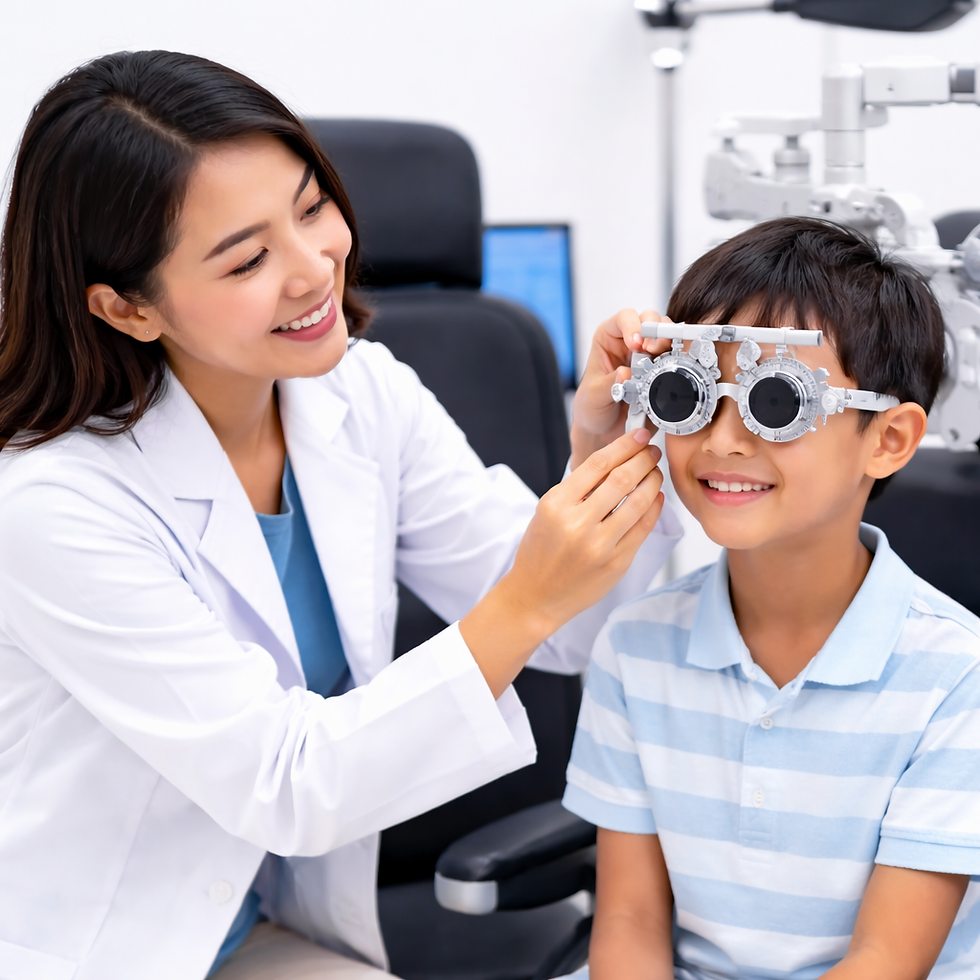
Understanding Myopia in Children
Myopia, also known as nearsightedness, is becoming increasingly common in children around the world. Children with myopia can see objects up close clearly, but distant objects—such as classroom boards or road signs—appear blurry.
Over the past two decades, the number of children developing myopia has risen significantly. Experts believe this increase is related to increased screen time, extended near work, and reduced outdoor activity. While glasses can correct blurry vision, they do not stop the underlying progression of myopia.
This is where myopia management becomes important.
Why Myopia Management Matters
Myopia is more than just needing stronger glasses every year. As myopia progresses, the eye continues to grow longer. Higher levels of myopia are associated with a greater lifetime risk of serious eye conditions, including:
Retinal detachment
Glaucoma
Myopic macular degeneration
Early cataracts
Myopia management focuses on slowing the progression of nearsightedness during childhood, when the eyes are still developing. By controlling progression early, we can help reduce the risk of vision-threatening complications later in life.
Signs Your Child May Be Developing Myopia
Parents often notice subtle changes when myopia begins to develop. Common signs include:
Squinting to see distant objects
Sitting very close to screens or books
Complaining of headaches or eye strain
Difficulty seeing the classroom board
Frequently rubbing the eyes
If your child shows any of these symptoms, a comprehensive eye exam can determine whether myopia is present.
Modern Myopia Management Options
Today, eye doctors have several evidence-based strategies designed to slow myopia progression in children. Treatment plans are individualized depending on a child’s age, prescription, and lifestyle.
Some common approaches include:
Specialized Contact Lenses: Certain soft contact lenses are designed specifically to reduce the progression of myopia by changing how light focuses on the retina.
Orthokeratology (Ortho-K): These specially designed lenses are worn overnight and gently reshape the cornea while sleeping, allowing children to see clearly during the day without glasses.
Prescription Eye Drops: Low-dose atropine eye drops have been shown in studies to slow myopia progression in many children.
Lifestyle Guidance: Increasing outdoor activity and managing prolonged screen use can also play an important role in slowing myopia progression.
The Importance of Early Detection
Children’s eyes change quickly. Early detection of myopia allows doctors to begin treatment before prescriptions become highly progressed. Regular eye exams help monitor changes in vision and ensure children receive the most appropriate treatment at the right time.
Supporting Healthy Vision Habits
Parents can help support their child’s eye health with a few simple habits:
Encourage at least 1–2 hours of outdoor activity daily
Follow the 20-20-20 rule when using screens
Ensure proper lighting during reading or homework
Schedule regular comprehensive eye exams
These habits can help support overall eye health while medical treatments work to control myopia progression.
Myopia Management at Santa Clara Vision Center
At Santa Clara Vision Center, our doctors provide comprehensive eye exams and personalized myopia management programs designed to protect children’s long-term vision.
Our team evaluates each child individually and recommends treatment options tailored to their needs, lifestyle, and stage of myopia progression.
If you are concerned about your child’s vision or would like to learn more about myopia management, scheduling a comprehensive eye exam is the first step toward protecting their future eye health.


Comments